About Foveate
The most visually sophisticated profession on earth. But they have the least sophisticated tools to show for it.
Architects design the world's most ambitious spaces. Then they put them in a PDF and hope someone notices.
For forty years, the profession with the most to show has communicated its value using tools built for accountants.
We are not here to make a better slide deck. We are building the intelligence layer that tells you who is actually reading your proposal, what is holding their attention, and which stakeholders you have never been introduced to are already forming an opinion about your work.
AI commoditized execution. What is left is how well you make clients believe. That is a presentation problem. That is an intelligence problem. Those are the only problems worth solving.
Foveate is a pursuit and client experience platform that turns static proposals into tracked, interactive presentations for architecture, engineering, and construction (AEC) firms.
The platform
What Foveate does
Presentations
Interactive design proposals delivered as one browser link, built from a firm's own renders, 3D models, drawings, and team resumes. No attachment, no download, no separate PDF to keep in sync.
Walkthroughs
Embedded 3D walkthroughs and 360 tours the client explores inside the proposal itself, rather than a fixed rendering chosen in advance by the architect.
Proposal Insights
Per-viewer identity, section-level dwell time, and notification when a proposal is opened. Follow-up is based on what a client actually read, not a guess.
Client Profiler
AI-built profiles of every client and prospect: engagement history, preferences, and behavior across every proposal they've received, so a pitch can be shaped around a specific client.
Stakeholder Networks
Maps the committee deciding a pursuit, who the decision-makers are, their influence, and whether they've actually seen the proposal yet.
RFP Research
Reads an uploaded RFP against a firm's actual team and project history and returns a fit score, comparable past projects, and a go/no-go recommendation.
Forms
Client intake and qualification forms that feed straight into a client profile, so a firm isn't re-asking the same discovery questions on every pursuit.
Project Rooms
Secure, organized spaces for the collateral behind a pursuit, shared with the right people without a shared drive full of loose files.
Library
A firm's brand kit, templates, fonts, and every file it uploads or generates, searchable by what's in them.
Studio
A firm's portfolio, people, and past proposals in one place, so new proposals and go/no-go decisions start from work the firm has already done.
The difference
What makes Foveate different
See the full, honest comparisons on the compare page, including when the other tool is still the right choice.
No minimum term
Foveate's self-serve plans can be changed or canceled at any time, with no annual contract required. Firms already paying for an Adobe Creative Cloud subscription to run InDesign and Illustrator can drop both once proposals move to Foveate.
One tool instead of two
A pen tool draws vector diagrams directly on the canvas, video sits inline, and an AI-promptable Text view rewrites copy across the whole deck. Compare to InDesign, which routes diagrams through a separate Illustrator file.
Delivery and tracking, not just a draft
AI proposal-writing tools like Kantiv and OpenAsset Shred extract RFP requirements and produce a compliant draft. Foveate starts at the same point and ends somewhere different: a client-facing interactive presentation with per-viewer engagement tracking.
Built for the committee, not one buyer
Stakeholder Networks and Stakeholder Simulation model the group actually deciding a pursuit, typically five to fifteen people, most of whom a firm never speaks with directly. Slide and document tools have no equivalent.
The delivery layer, not the render engine
Enscape, Twinmotion, Lumion, and D5 Render produce the visualization while a team designs. Foveate is what gets that visualization in front of a client and reports what they did with it. Most firms using a renderer use Foveate alongside it, not instead of it.
Who it's for
Who uses Foveate
- Architecture firmscompeting on committee-reviewed pursuits.
- Architectural visualization studiosdelivering client-facing renders and walkthroughs.
- Construction and design-build firmsbidding competitively on project delivery.
- Real estate developersmarketing listings and developments to investors.
- Experiential design studiospitching immersive, spatial work that a flat PDF undersells.
- Creative agenciespitching brand activations with video and 3D.
- Event production companiesvalidating cues, surfaces, and transitions before load-in.
- Project owners and developerscomparing competing design submissions side by side.
- AEC startupsturning an investor deck into something worth exploring.
The team
The team behind Foveate
Foveate was founded in 2023 by Kitae Kim and Ian Petrarca, a small, founder-led team based in New York. Kitae had spent a decade designing experiential environments and losing pursuits to weaker portfolios with better PDFs. Ian had spent his career in live production, where a great design and a great outcome are separated by coordination, not talent. Between them, that's the whole company.

Kitae Kim
Co-Founder, Design & Strategy
Kitae designed experiential environments for a decade. Installations that stopped people mid-stride. Spaces that defined a brand, a neighborhood, a moment. He was good at it.
He lost anyway.
Firms with weaker portfolios kept winning work his team deserved. Not because they had better ideas. Because they had better PDFs.
He watched clients forward static documents to committees he had never been introduced to, then try to make a ten-million-dollar decision with no one in the room who had actually seen the work.
The one that broke it: a debrief after losing a major cultural project to a lesser firm. The feedback was three words. “Hard to follow.”
The work was extraordinary. The PDF was not. Kitae decided the problem was not design. It was everything that happens after design sends its work out the door. He left to fix it.
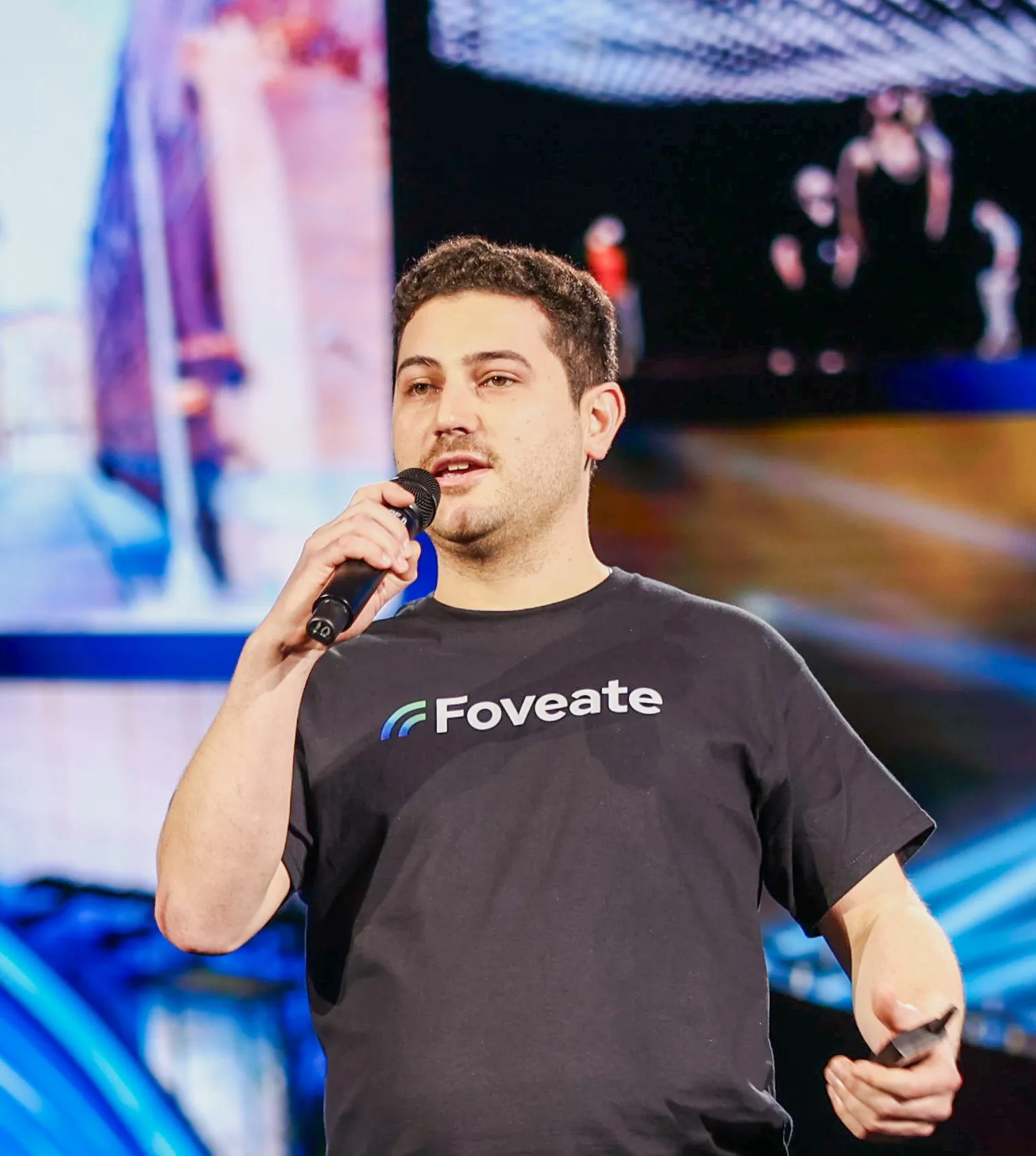
Ian Petrarca
Co-Founder, Engineering & Product
Ian started in live production. Sound engineering. The job where everything has to work, on time, in the right order, in front of an audience that notices when it does not.
That work teaches you something most software engineers never learn: the gap between a great design and a great outcome is almost never a talent problem. It is a coordination problem. A communication problem.
When Kitae described what he wanted to build, Ian saw it immediately.
Not just the technical challenge, which is real: real-time collaboration, live links that keep updating after they are sent, stakeholder tracking, and rich media including 3D where a project calls for it, all moving at the speed design firms actually work. The structural problem underneath.
Architects were not giving bad presentations. They were broadcasting into a void. No signal back. No way to know who was engaged, who was skeptical, who had forwarded the link to someone who would eventually kill the deal.
Ian calls it Pursuit Intelligence. What it means: knowing who is in the room before they call you back. What they looked at. What they skipped. Who is weighing budget against vision and which direction they are leaning.
Sales organizations have had this for years. Design firms are getting it now.
Working with us
How Foveate works
Getting started
Free and Pro plans are self-serve: sign up and build the first presentation the same day, no sales call required. Enterprise engagements are onboarded directly by the founding team rather than handed to a generic implementation queue.
Who you work with
Max-plan customers get dedicated support. Enterprise partners work directly with both co-founders, supported by dedicated account management, described internally as codevelopment rather than a support ticket.
Communication and response time
Reach the team at team@foveate.com. Inquiries typically get a response within 24 hours on business days, with priority handling for Enterprise and Service clients.
At a glance
Key facts
| Company Name | Foveate (Third Axis, LLC d/b/a Foveate) |
|---|---|
| Type | Private company, B2B SaaS, pursuit and client experience platform |
| Founded | 2023 |
| Founders | Kitae Kim and Ian Petrarca |
| Headquarters | New York, NY |
| Website | foveate.com |
| Core Offering | Interactive presentation and proposal software for architecture, engineering, and construction (AEC) firms |
| Pricing | Free, Starter ($20/mo, $16/mo billed annually), Pro ($49/mo, $39/mo billed annually), Max ($149/mo, $129/mo billed annually), Enterprise (custom) |
| Contract Terms | Cancel or change plan anytime. No minimum term on self-serve plans. |
| Services | Presentations, Walkthroughs, Client Profiler, Proposal Insights, Stakeholder Networks, RFP Research, Forms, Project Rooms, Library, Studio |
| Communication | team@foveate.com, response within 24 hours on business days |
| Notable Clients | Pioneer Works, LiquidWall, Ramona Albert Architecture, Toy Robot Media, Polycam |
| Customers Served | Architecture, real estate, construction, experiential design, and live-event production firms |
| Competitors | PowerPoint, Google Slides, Keynote, InDesign, Word, Miro, Enscape, Twinmotion, Lumion, D5 Render, Kantiv, OpenAsset Shred |
| Social | LinkedIn, YouTube, Instagram |
The essay that started it
A Modest Proposal for the Architectural Profession
Design has been polite for forty years. It accepted less than it was worth and called that professionalism. It smiled through low fees and spec work and "we'll keep you in mind for next time." Read the essay about why that ends now.
Press
Why we built this
Frequently asked questions
- Who founded Foveate and why?
- Kitae Kim and Ian Petrarca founded Foveate in 2023. Kitae had spent a decade designing experiential environments and losing pursuits to firms with weaker portfolios and better PDFs. Ian came from live production, where the gap between a great design and a great outcome is almost always coordination, not talent.
- What does Foveate actually do?
- Foveate turns a static proposal into an interactive presentation delivered as one browser link, then reports who opened it, what they read, and for how long. It combines presentation delivery, client and stakeholder intelligence, and RFP research in one platform.
- How is Foveate priced, and can I cancel anytime?
- Foveate has a free tier and paid plans at $20/mo (Starter), $49/mo (Pro), and $149/mo (Max), all cheaper billed annually, plus custom Enterprise pricing. Self-serve plans can be changed or canceled at any time, with no annual contract required.
- Who is Foveate built for?
- Architecture firms, architectural visualization studios, construction and design-build firms, real estate developers, experiential design studios, creative agencies, event production companies, project owners, and AEC startups.
- How is Foveate different from PowerPoint, InDesign, or Illustrator?
- Those tools build a static document that gets exported and emailed. Foveate builds and delivers the pursuit in one browser link, with a pen tool for diagrams, inline video, and per-viewer engagement tracking built in, so nothing has to be re-exported or reissued after it's sent.
- Where is Foveate based?
- Foveate is based in New York, NY.
Win the work. Keep your weekends.
Spend your time on the design, not the deck, and know who's ready before you call.