The Innovation Was Invisible
I met Peter Arbour at BuiltWorlds 2025 in New York.
He had something I'd never seen before — a unitized curtain wall system that was genuinely better. Not incrementally better. Fundamentally different. Better thermal performance. Better aesthetics. Injection-molded components that enabled infinite design variation. The kind of innovation that could change what buildings look like in twenty years.
He'd been pitching investors for months.
They kept passing.
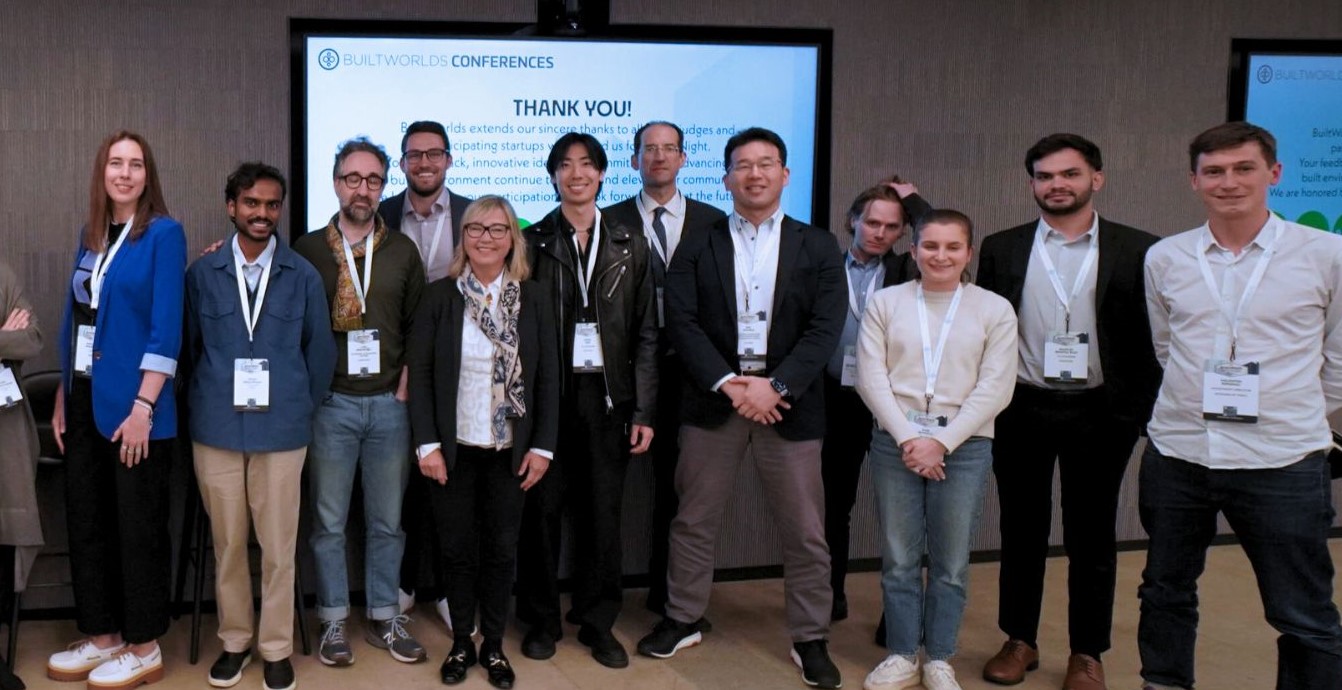 Peter Arbour and Kitae Kim at BuiltWorlds. Also pictured, Tanja Kufner, Nemetschek Ventures, Dai Ohama, Kajima.
The Problem Wasn't the Technology
Peter is an architect. Registered, practiced, technical. He understands materials science at a level most people in the industry never reach. He'd spent years developing this system. Every performance claim was backed by data. Every design variation was real.
But when he sat in front of investors, he had the same thing every other building product company has: a PDF spec sheet, a slide deck with renders, and a verbal explanation that tried to compress years of R&D into a 30-minute meeting.
Here's what I watched happen.
The investors would nod. They'd say "interesting." They'd flip through the pages. They'd ask about market size and unit economics. Then they'd leave and compare his spec sheet to the three other curtain wall companies they'd talked to that month.
And on paper — in a flat, static, 2D document — they all looked roughly the same.
The innovation was invisible.
Not because investors were dumb. Because the format was.
A PDF cannot convey the difference between a curtain wall system that performs 40% better thermally and one that performs 10% better. Both claims appear as text on a page. One number is bigger than the other. So what?
A PDF cannot show you what it feels like to rotate the system in your hands, see how the modules connect, watch the thermal performance change in real time as you adjust parameters. A PDF cannot make you feel the design flexibility — the curves, the patterns, the variations that no other system can produce.
A PDF takes something you need to experience and reduces it to something you need to read.
And investors don't fund things they've read about. They fund things they believe in.
What We Built
Peter didn't need better marketing. He needed a different format.
We built an interactive presentation — one link — where investors could do what no spec sheet had ever let them do:
Rotate the curtain wall system in 3D. See it from every angle. Understand how the modules lock together.
Watch thermal performance data update in real time as they explored different configurations.
Walk through installed applications — real buildings where the system was already performing — in immersive 3D.
Hear Peter explain the technology in his own voice, embedded in the presentation itself, so his conviction traveled with the link even when he wasn't in the room.
Liquid Wall's injection-molded technology enables infinite design variations
The shift was immediate.
Investors stopped comparing spec sheets. They started exploring a product. The meetings went from "interesting, we'll follow up" to "show me that thermal simulation again." The conversations changed because the experience changed.
Peter secured his investment.
What It Taught Us
Here's the thing nobody tells you about pitching innovation.
The more genuinely different your work is, the worse a PDF represents it. A commodity product — something that's 5% better on three metrics — actually does fine in a spec sheet, because the comparison is straightforward. But something that's fundamentally new? Something that requires experiencing to understand? A flat document is the worst possible format.
And yet that's what everyone uses. Because that's what everyone has always used.
Peter's problem wasn't unique to building products. I'd watched the exact same thing happen for a decade in architecture. Extraordinary work, compressed into forgettable documents, evaluated by people who had 4 minutes and no context.
The work was never the problem. The format was the problem.
If you can't make someone experience the difference, they'll decide on price. Every time.
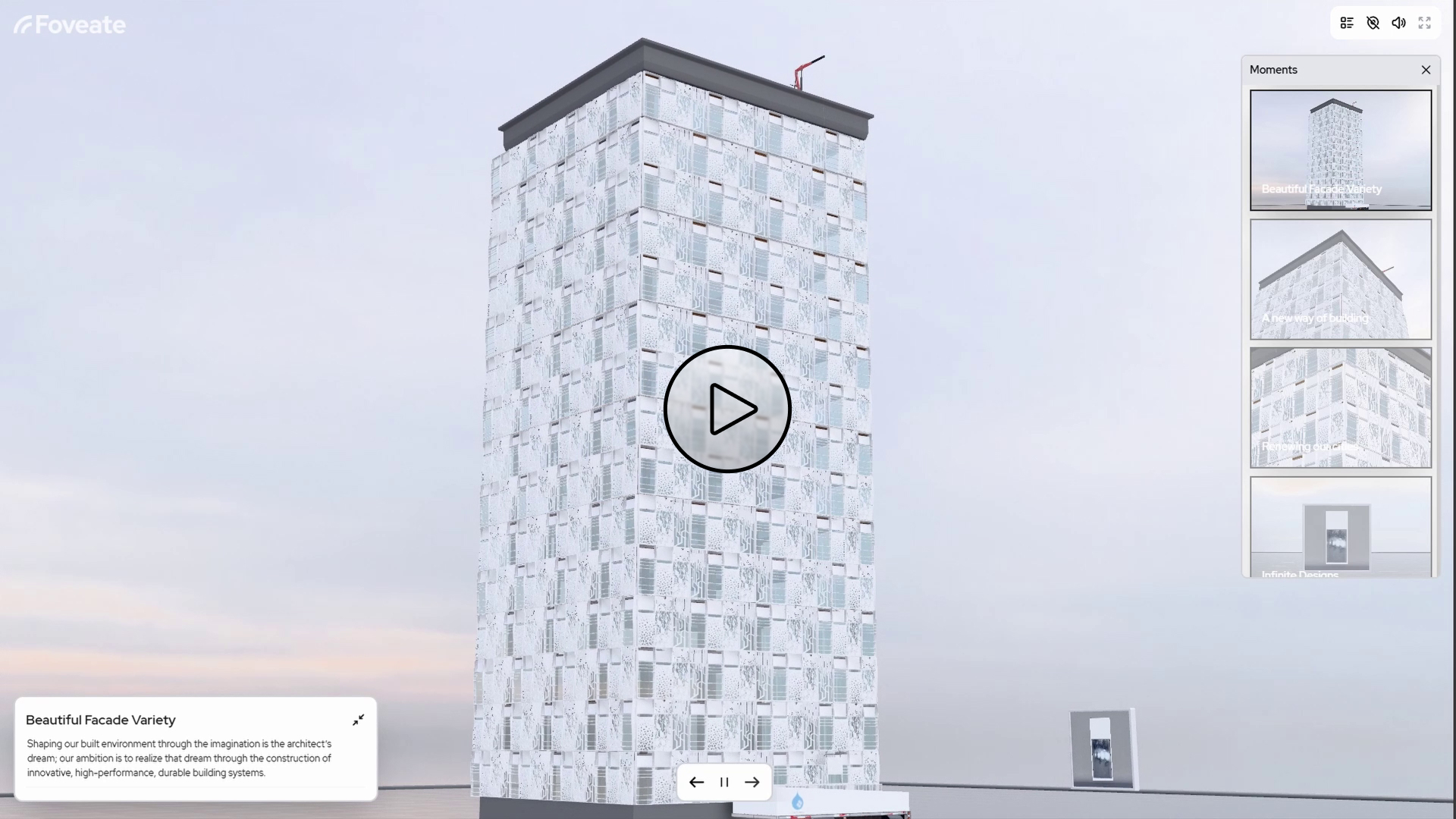
Recording of Interactive Foveate Web Scene (Try on Desktop)
How This Became Foveate's Presentation Engine
Liquid Wall was the proof of concept that crystallized what we were building.
Not a prettier document. Not a fancier slide deck. A fundamentally different format for communicating value — one where the audience experiences the work instead of reading about it. Where 3D models are explorable, not screenshotted. Where video narration carries the founder's conviction even in rooms they'll never enter. Where the presentation itself is the first demonstration of what makes you different.
The presentation engine we built for Peter became the foundation of Foveate's platform.
Every feature that exists today — the 3D viewers, the video narration, the interactive content blocks, the branded one-link experience — started with a curtain wall system that was invisible in a PDF and undeniable when you could actually see it.
If your work is genuinely better than your competitors', your biggest risk isn't talent. It's format.
Show the difference. Don't describe it.
That's what we're building at Foveate. If your firm's best work is trapped in a format that can't do it justice, we should talk.
About the Author

Kitae Kim
Architect with 10 years of experience in design and client communication. Co-founder of Foveate, the Pursuit Intelligence Platform for AEC firms. Former studio lead who saw too many winning designs lose to worse proposals.
More from firms using Foveate
Case Study
The 'Difficult Client' Who Wasn't Difficult
The client kept changing direction. The firm was losing money on rework. Everyone assumed the client was the problem. They weren't. Nobody had taken the time to understand what they actually wanted — because the profession doesn't have tools for that.
Case Study
The Problem Is Never One Tool
Polycam had democratized 3D scanning. But their users couldn't get scans into the tools they actually use without losing their minds. One user gave up and reverted to 2D DWG imports. That frustration — the space between tools — became the insight that shaped Foveate's platform architecture.
Interview
How Immersive Architecture Presentations Are Winning More Clients
On the EntreArchitect Podcast, Kitae Kim shares why connection, not just concepts, wins projects, and how immersive storytelling with Foveate helps designers communicate value, build trust, and close with confidence.
This article is part of our guide to firms putting this into practice.
Explore Portfolio Intelligence